
How Hands-On Activities Build Problem-Solving Skills in Kids
Why Hands-On Learning Activities Help Children Think Critically and Develop Problem-Solving Skills
TLDR (Parental Notes)
- Hands-on, project-based learning helps kids build problem-solving skills by allowing children to experiment, test ideas, and discover solutions through experience.
- When children face problems and challenges during play or exploration, they begin to think critically, evaluate options, and learn how to solve problems independently.
- Building projects and creative challenges help strengthen a child’s critical thinking skills while teaching cause-and-effect and decision-making.
- Parents can teach problem-solving skills by asking open-ended questions, helping kids brainstorm, and encouraging them to try different solutions.
- These experiences help children develop a growth mindset, build confidence, and practice thinking skills that support lifelong learning.
How Hands-On Activities Help Kids Think Critically and Build Problem-Solving Skills Through Real Learning Experiences
Children develop strong problem-solving skills when they are given opportunities to explore, experiment, and work through challenges on their own. Rather than simply receiving answers, kids learn more effectively when they interact with their environment and try different ways to solve a problem.
Hands-on learning activities naturally create these opportunities. When a child builds a structure, completes a puzzle, or experiments with materials, they must observe what happens, adjust their approach, and try again. This process encourages children to think critically while strengthening important thinking skills.
Over time, parents often notice that hands-on activities build problem-solving skills in kids because children learn to test ideas and adjust their thinking through experience.
Developmental psychologists such as Jean Piaget observed that children learn best when they actively interact with the world around them. Through exploration and experimentation, children begin to understand cause-and-effect relationships and develop stronger cognitive abilities.
Hands-on challenges also help children build confidence. Each small success shows a child that problems can be solved through persistence, curiosity, and creative thinking.
By encouraging children to explore, build, and experiment, parents and educators can help kids develop the critical thinking and problem-solving skills that support learning throughout life.
Why Hands-On Activities Help Kids Develop Problem-Solving Skills
Hands-on activities create natural opportunities for children to practice problem-solving skills. When a child interacts with materials, experiments with ideas, or builds something with their hands, they must actively think about how to solve a problem rather than simply follow instructions.
This type of learning encourages children to observe what happens, test possible solutions, and adjust their approach when something does not work. Through this process, children begin to understand that solving a problem often requires experimenting with different ideas before finding a solution that works.
Hands-on learning activities also support cognitive development because they allow children to connect thinking with action. When kids manipulate objects, build structures, or explore how materials interact, they begin developing a deeper understanding of cause-and-effect relationships.
These experiences strengthen important thinking skills because children must analyze situations, make decisions, and try new approaches when faced with a challenge. Over time, repeated opportunities to explore and experiment help children develop the confidence needed to solve problems independently.
By encouraging hands-on exploration, parents and educators create learning environments where children can practice problem-solving skills in meaningful and engaging ways.
How Trial-and-Error Activities Teach Kids to Solve Problems
Children often learn how to solve problems by experimenting with different ideas until something works. This process, commonly known as trial-and-error learning, allows kids to test possible solutions, observe the results, and adjust their thinking based on what they discover.
When a child is faced with a problem during an activity—such as building a structure, completing a puzzle, or figuring out how materials fit together—they naturally begin exploring different ways to solve the problem. If one solution does not work, they try another. Each attempt helps children learn more about the situation and brings them closer to finding a solution.
This process strengthens the problem-solving process because children begin to recognize patterns and understand which strategies are effective. Over time, they develop persistence and become more comfortable working through challenges.
Trial-and-error learning also encourages children to think critically. Instead of giving up when something fails, kids begin to view mistakes as useful feedback that helps guide the next attempt.
As children repeat this process across different activities, they develop stronger problem-solving abilities and gain confidence in their ability to find solutions independently.
How Building Projects Strengthen Critical Thinking Skills
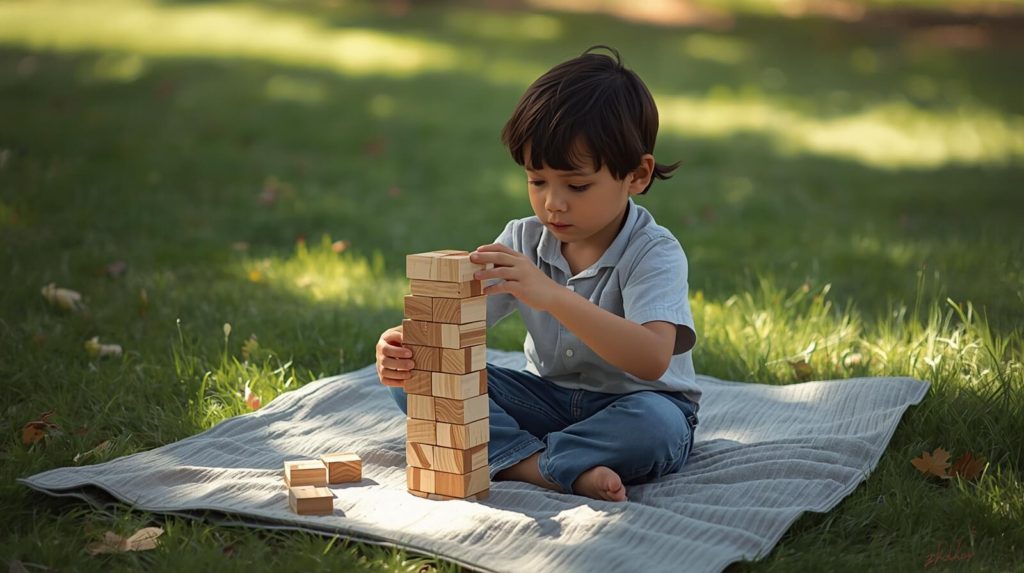
Hands-on building projects encourage children to approach challenges with curiosity and creativity. When a child constructs something—whether stacking blocks, assembling materials, or designing a simple structure—they must think about how different pieces work together and how to solve problems that appear along the way.
These experiences naturally strengthen critical thinking skills because children must plan, test ideas, and adjust their approach when something does not work. Instead of following a single correct answer, children begin exploring different possibilities and evaluating which solution works best.
Building projects also encourage creative problem-solving. A child might discover that one design is unstable and decide to try another method. Through this process, children learn how to analyze a situation, experiment with different strategies, and find solutions independently.
These types of hands-on challenges are also closely connected to early STEM learning. When children design, build, and test structures, they are practicing important reasoning skills such as observation, prediction, and experimentation.
Over time, these experiences help children develop stronger critical thinking abilities while reinforcing the confidence needed to approach new challenges creatively.
How Parents Can Teach Problem-Solving Skills Through Everyday Challenges
Parents play an important role in helping children develop strong problem-solving skills. Everyday situations often provide simple opportunities for kids to practice thinking through a challenge and discovering possible solutions.
One effective way to teach problem-solving skills is by asking open-ended questions when a child encounters a problem. Instead of immediately providing the answer, parents can ask questions such as, “What do you think might work?” or “What could you try next?” These questions encourage children to think critically and explore different ideas.
When children are encouraged to brainstorm solutions, they begin developing decision-making skills and confidence in their own thinking. A child might consider several possible ways to solve a problem before choosing one to test. This process helps children understand that problems often have more than one possible solution.
Parents can also support this learning by creating a supportive environment where mistakes are seen as part of learning rather than failure. When children feel safe experimenting with ideas, they are more likely to explore new strategies and learn from the results.
Over time, these experiences help children become more confident thinkers who can approach challenges with curiosity and independence.
Why Shared Problem-Solving Experiences Help Children Think Critically
Many of the most meaningful learning moments happen when children solve problems together with others. When a child works through a challenge with a parent, sibling, or friend, they are exposed to different ideas and ways of thinking about a situation.
These shared experiences help children develop stronger critical thinking skills because they must listen, compare ideas, and evaluate different ways to solve a problem. Instead of relying on a single approach, children begin exploring multiple possibilities before deciding which solution might work best.
Working through challenges together also helps children build confidence in their ability to solve problems. When adults guide the conversation with supportive questions and encouragement, children learn that their ideas matter and that thoughtful reasoning can lead to solutions.
Over time, these shared problem-solving moments strengthen both learning and relationships. Children gain valuable thinking skills while also learning how cooperation and communication can help solve problems more effectively.
Why Hands-On Learning Helps Kids Build Problem-Solving Skills for Life
Hands-on learning gives children a practical way to solve problems, test ideas, and build confidence through experience. When parents teach problem-solving skills through exploration, building projects, and real-world problem-solving, children begin to see that mistakes are part of the problem-solving process, not something to fear.
This is one powerful way to help your child develop essential thinking skills early. Whether you ask your child to brainstorm, make a list of different ways of solving a challenge, or simply encourage your child to keep trying, these moments help kids build effective problem-solving strategies and a growth mindset.
At Lafleur Media, we believe hands-on, experiential learning is a meaningful way to help children think critically and creatively, develop the skills they need, and learn to solve problems with confidence.
Disclaimer
Educational content only. Not medical, developmental, or behavioral advice. Consult a qualified professional for concerns about your child’s