
Why Outdoor Exploration Builds Confidence in Children
How Outdoor Play and Nature Exploration Help Children Build Confidence
TLDR (Parent Notes)
- Outdoor exploration helps children build confidence by encouraging curiosity, discovery, and problem-solving in real environments.
- Unstructured outdoor play allows children to experiment, make decisions, and learn through hands-on experiences.
- Small outdoor challenges—like navigating a trail or climbing over rocks—help children develop resilience and independence.
- Spending time in nature supports emotional development, stress regulation, and social cooperation.
- Shared outdoor experiences also strengthen parent-child relationships while supporting healthy childhood development.
How Outdoor Learning and Play in Nature Support Healthy Child Development
Children don’t build confidence only by hearing encouragement — they build it by discovering what they are capable of doing.
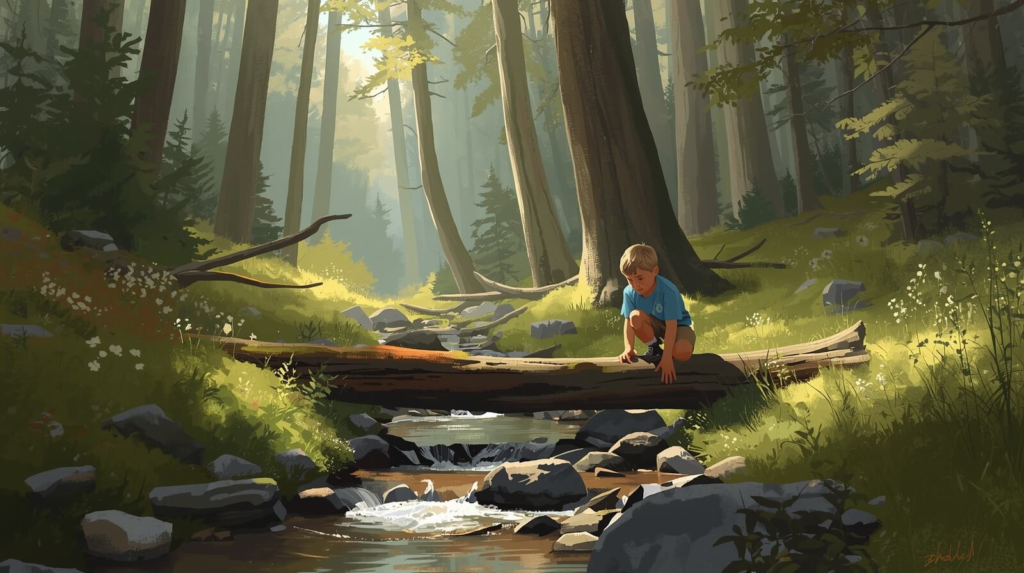
Outdoor exploration naturally creates the kind of learning environment where this discovery happens every day. When children climb over a fallen log, investigate a stream, or follow a winding trail, they are doing far more than simply playing outside. They are experimenting, solving problems, and learning how to trust their own abilities.
Nature offers something that structured environments often cannot: unpredictability. A trail may curve unexpectedly, a rock may require careful footing, or a question about the natural world may spark curiosity. Each of these moments encourages children to observe, adapt, and think independently.
Over time, these small experiences add up. Children begin to realize that challenges are not obstacles to avoid but opportunities to learn. With each discovery, their confidence grows—not because someone told them they could succeed, but because they experienced it themselves.
Outdoor exploration turns the world into a classroom where curiosity, resilience, and confidence develop side by side.
Why Outdoor Play Creates Powerful Learning Experiences
Outdoor play creates a type of learning experience that is difficult to replicate indoors. Natural environments constantly change, presenting children with new sights, sounds, and challenges that encourage exploration and curiosity. Instead of following a fixed set of instructions, children must observe their surroundings and decide how to interact with them.
This process is one of the foundations of experiential learning. When children climb rocks, investigate insects, or follow a trail through the woods, they are engaging directly with the world around them. These activities allow children to experiment, ask questions, and discover solutions on their own.
Outdoor play also encourages independence. Without rigid structures guiding every step, children begin making small decisions about how to move, explore, and solve problems. Over time, these choices help build confidence and strengthen critical thinking skills.
Nature also provides a rich learning environment that supports multiple areas of development. Physical activity improves coordination and health, while exploration stimulates curiosity and cognitive growth. Even simple outdoor experiences can become powerful opportunities for children to learn through play.
These early experiences often shape how children approach learning throughout their lives.
These lessons reinforce why experiential learning builds confident, resilient kids.
How Outdoor Challenges Help Children Build Confidence
Confidence grows when children learn they can face small challenges and succeed. Outdoor environments naturally provide these opportunities in ways that feel exciting rather than overwhelming.
When children climb over rocks, balance along a fallen log, or navigate a winding trail, they begin developing trust in their own abilities. Each obstacle becomes a problem to solve. With practice, children learn how to adjust their movements, assess situations, and try again if something doesn’t work the first time.
These experiences build resilience. Instead of avoiding difficulty, children begin to see challenges as part of exploration. A steep hill, uneven ground, or a tricky path becomes something they can figure out rather than something to fear.
Outdoor challenges also allow children to develop independence. In natural environments, there are often multiple ways to approach a situation. One child may choose to carefully step across stones in a stream, while another may look for a safer route around it. Both approaches require observation, decision-making, and confidence.
Over time, these small successes reinforce a powerful lesson: effort leads to progress. Children begin to understand that confidence is not something they are given — it is something they build through experience.
Outdoor exploration quietly teaches children that they are capable of far more than they first believed.
How Nature Exploration Encourages Curiosity and Problem Solving
Nature naturally invites children to ask questions. When a child steps into an outdoor environment filled with trees, water, insects, and changing landscapes, curiosity becomes the starting point for learning.
Unlike structured environments where instructions guide every step, outdoor exploration allows children to observe and investigate the world around them. A child may notice patterns in leaves, watch how water flows around rocks, or wonder why certain insects appear in one place but not another. These small discoveries encourage children to think, ask questions, and test ideas.
This process supports cognitive development because children are learning through direct interaction with their surroundings. Instead of memorizing information, they are discovering relationships between cause and effect. A stick becomes a tool for testing the depth of a puddle, while a fallen branch might become part of imaginative play during exploration.
Outdoor exploration also encourages children to solve problems in real time. When a path is blocked or terrain becomes uneven, children begin thinking about possible solutions. They might look for another route, balance carefully, or work with others to figure out the best way forward.
Through experiences like these, children learn that curiosity and exploration are powerful tools for understanding the world around them.
Why Outdoor Exploration Supports Emotional and Social Development
Outdoor exploration offers children more than physical activity. Spending time in nature can also support emotional development and mental well-being in powerful ways.
Natural environments often feel calmer and less overwhelming than busy indoor settings. When children play outside, they have space to move, explore, and interact at their own pace. This freedom allows them to process emotions, reduce stress, and feel more comfortable expressing themselves.
Outdoor activities also create opportunities for social development. When children explore together, they naturally practice communication, cooperation, and empathy. Whether working together to build something in a play space, helping a friend across uneven ground, or sharing discoveries during exploration, these moments encourage teamwork and understanding.
Time in nature also helps children build patience and persistence. Outdoor environments do not always provide immediate results, which encourages children to slow down, observe carefully, and try different approaches when solving problems.
Over time, these experiences help children develop emotional resilience and stronger social awareness. Through regular outdoor exploration, children learn not only about the natural world, but also about how to navigate relationships and emotions in healthy ways.
How Outdoor Experiences Strengthen Parent-Child Connection
Spending time outdoors together creates opportunities for families to slow down and reconnect. When parents and children share outdoor experiences, the focus shifts away from schedules and distractions and toward exploration, conversation, and discovery.
These moments allow parents to observe how their child thinks, reacts, and solves problems in real situations. A walk through a park, exploring a trail, or discovering wildlife together can naturally lead to conversations that might not happen in more structured environments.
Outdoor activities also create shared learning experiences. Parents and children often discover things together — noticing patterns in nature, observing animals, or figuring out how to navigate a new path. These shared discoveries encourage communication and cooperation while strengthening emotional bonds.
Regular time outdoors can also build trust between parents and children. When adults support exploration while allowing children to take safe risks, children begin to feel both independent and supported. This balance helps create a healthy learning environment where confidence and curiosity continue to grow.
Over time, these shared experiences become meaningful memories that strengthen family relationships and encourage children to continue exploring the world with curiosity and confidence.
Why Outdoor Exploration Helps Children Grow Into Confident Learners
Confidence doesn’t develop overnight. It grows through real experiences that allow kids to explore, experiment, and discover what they are capable of doing.
Outdoor play provides a powerful outdoor learning environment where children engage in meaningful activities that support resilience, curiosity, and healthy child development. Whether climbing over a fallen log, exploring outdoor areas along a trail, or observing wildlife during outdoor adventures, these play experiences help children build confidence while supporting physical development and mental well-being.
Just as importantly, spending time in nature allows families to share meaningful moments together. These shared outdoor activities encourage curiosity, strengthen emotional development, and show the importance of outdoor play in early childhood learning and development.
At Lafleur Media, we believe the benefits of outdoor exploration extend far beyond recreation. When families provide children with regular outdoor play opportunities and time in nature, they nurture resilience, curiosity, and the confidence children need to continue growing throughout childhood.
Disclaimer:
This content is for educational purposes only and not medical or behavioral advice. Always consult qualified professionals regarding your child’s needs.