

Early Learners and Pre-Verbal Support: Helping Your Child With Autism Build Communication and School Readiness
Key Takeaways on Autism and Child Development
- Autism influences how children communicate, learn, and engage with the world from an early age.
- Developmental differences often appear through play, attention, regulation, and interaction before speech.
- Early support builds skills and understanding rather than rushing milestones or changing who a child is.
- Family routines and responsive strategies support confidence, learning, and school readiness.
- Progress is individual and non-linear, with growth happening in meaningful stages over time.
- Understanding development helps parents advocate with clarity and compassion at home and school.
Parenting a child with autism can feel like navigating a world of questions—especially in the first few years of development. When will my child speak? How can I help them connect? According to the Centers for Disease Control and Prevention (CDC), early communication skills — even before speech emerges — are critical markers of social and behavioral development. Gestures, eye contact, and shared attention form the foundation of language long before words appear.
Families who understand this pre-verbal stage gain the power to support their child’s communication journey through play, routine, and early intervention. Research from Autism Speaks and the National Institutes of Health (NIH) shows that young children with autism who receive family-centered programs before age 3 build stronger social skills, language comprehension, and school readiness than those who begin later.
This guide translates those findings into real-world parent strategies that help children on the autism spectrum communicate and learn with confidence. You’ll discover how ABA therapy, play-based routines, and structured early childhood education activities strengthen social development and prepare young learners for preschool success.
Early support doesn’t just teach words—it builds connection, trust, and a foundation for lifelong learning and independence.
Understanding Pre-Verbal Communication

- Every child with autism communicates long before using words.
- Early communication includes gestures, eye contact, facial expressions, and shared play.
- Caregiver response teaches that attempts at communication work and encourages language growth.
- Experts at the CDC and Autism Speaks confirm that these early behaviors predict later language and social development.
- Building connection before correction creates trust and supports long-term communication development.
efore speech develops, pre-verbal communication is the foundation for all language and social interaction. When a child with autism reaches for a toy, pulls your hand, or makes a sound, they are expressing needs and emotions through nonverbal behavior. The CDC notes that recognizing these cues helps parents understand their child’s level of engagement and supports early communication development.
Experts from Autism Speaks explain that responding to these early signs reinforces that communication is meaningful. By mirroring actions, labeling items, or describing what your child with autism sees, parents help children connect words to feelings and actions.
Encouragement through early intervention doesn’t mean waiting for speech—it means noticing progress in gestures, eye gaze, and play. These early behaviors form the core of social and emotional development that prepares children for school readiness and lifelong learning.
Why Early Intervention Matters

- Early intervention builds communication, social, and emotional growth in young children with autism.
- The brain’s highest developmental plasticity occurs during early childhood.
- Services under IDEA Part C provide individualized support between birth and age 3.
- Evidence shows that therapy and family collaboration strengthen school readiness and long-term outcomes.
- Families who start early see faster progress and reduced frustration for both parent and child.
Early intervention changes the developmental path for every child with autism. The CDC reports that early services—especially before age 3—can significantly improve language, social interaction, and learning. The National Institutes of Health adds that these programs teach families how to embed communication strategies into daily routines so progress continues outside of therapy.
Under the Individuals with Disabilities Education Act (IDEA), Part C ensures access to early intervention services for infants and toddlers with developmental disabilities. These family-centered programs may include ABA therapy, speech and occupational therapy, or play-based interventions that target emotional and behavioral development.
For pre-verbal and nonverbal learners, early exposure to structured play and guided imitation creates the foundation for communication and social interaction. The earlier parents start supporting these skills, the more effectively children adapt to preschool routines and social expectations.
Early intervention isn’t only about therapy—it’s about empowering families with tools to nurture growth through patience, play, and connection.
ABA Strategies for Supporting Nonverbal and Early Learners
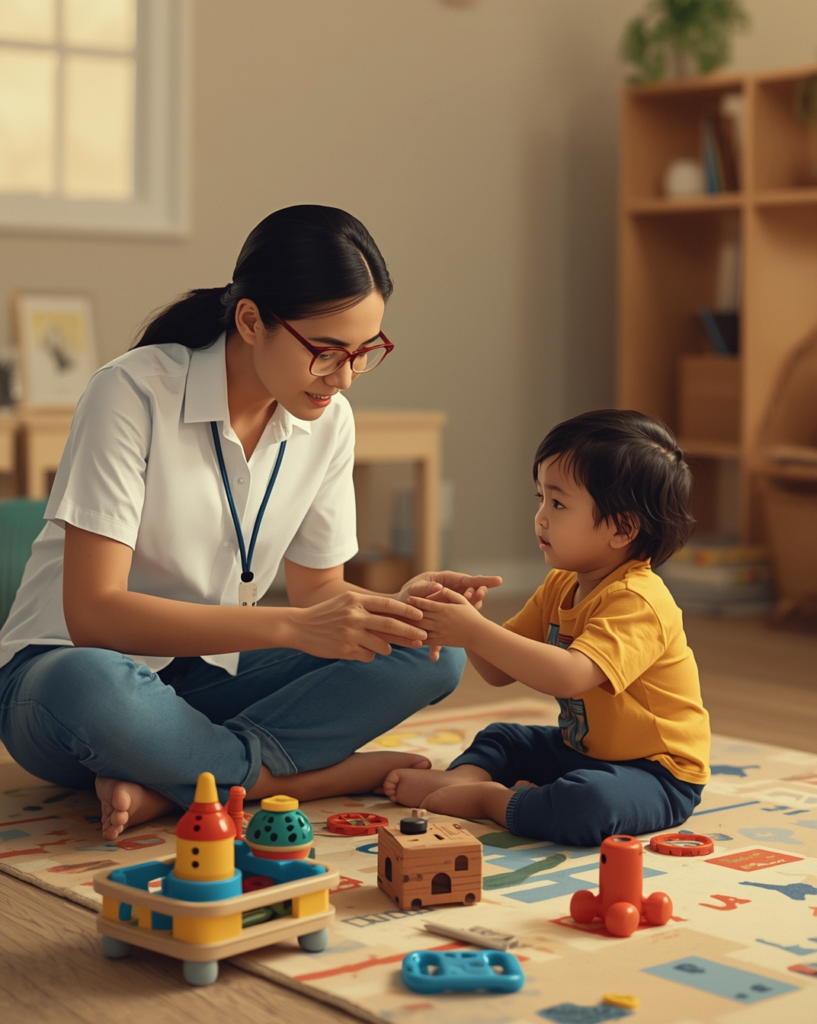
- Applied Behavior Analysis (ABA) is one of the most effective, evidence-based behavioral treatments for young children with autism spectrum disorder (ASD).
- ABA strategies help autistic children and early learners build communication, attention, and self-management through structure and positive reinforcement.
- Task analysis and modeling break skills into smaller, achievable parts, supporting school readiness in autistic children.
- Collaboration with a board certified behavior analyst (BCBA) ensures each learning program is tailored to the child’s strengths, sensory needs, and unique learning styles.
- Early, play-based intervention programs—like the Early Start Denver Model—combine applied behavior analysis with natural routines to strengthen social interaction and communication.
Behavioral therapy for children with ASD focuses on progress over perfection. A BCBA may use prompting, shaping, and positive reinforcement to help a child with autism gain confidence in social and academic settings. Over time, these strategies build independence and strengthen both language and social development.
When families use individualized education techniques and reinforce learning at home, children thrive in both therapy and daily routines. Early ABA support gives young children with autism the structure they need to explore, connect, and grow.
Creating Language-Rich Routines at Home

- Everyday routines—like meals, playtime, or bedtime—become natural opportunities to help children with autism spectrum disorder (ASD) build communication and social skills.
- Embedding language development into familiar settings supports school readiness and builds confidence.
- Visual schedules, picture charts, and consistent narration strengthen comprehension.
- Integrating ABA therapy goals into play helps children connect actions, emotions, and words.
- Repetition and predictability reduce anxiety and reinforce understanding for early learners.
For a child with autism, communication grows from the familiar. When parents describe daily actions—“We’re washing hands,” “It’s snack time,” or “Let’s find your shoes”—they transform ordinary moments into lessons in comprehension and expression.
These consistent cues improve language development, social interaction, and overall early childhood education outcomes. According to CDC Early Intervention and Autism Speaks Learning Resources, families who model communication in daily life help children build stronger social and behavioral foundations.
Inclusive routines don’t require elaborate tools—just intention and consistency. Every moment spent labeling, describing, or sharing emotion helps your child connect meaning to experience and prepares them for structured learning environments later on.
Working With Therapists and Schools

- Collaboration between parents, therapists, and teachers strengthens consistency across learning environments.
- Individualized Education Programs (IEPs) outline supports tailored to your child with autism.
- Regular check-ins ensure early goals align between home and school.
- Shared visual supports and reinforcement systems reduce confusion and anxiety.
- Inclusive classrooms promote empathy, social skills, and school readiness for autistic children.
For a child with autism spectrum disorder, consistent communication among caregivers and educators is essential. Whether your child is in early childhood education, a preschool program, or a home-based plan, collaboration ensures that strategies are practiced everywhere—not just during therapy sessions.
Families can request meetings with a board certified behavior analyst (BCBA), speech therapist, or special education teacher to review progress and adapt strategies. Federal supports under the Individuals with Disabilities Education Act (IDEA) guarantee access to services designed for children with disabilities, including individualized learning goals and early developmental support.
When families, teachers, and therapists coordinate around a unified learning program, children experience smoother transitions, better behavior regulation, and stronger engagement in group settings. Shared visuals, schedules, and communication logs between home and school create predictability—helping young children with autism feel secure and supported in every environment.
Common Barriers and How to Overcome Them

- Every child with autism learns differently, and development rarely follows a straight line.
- Burnout and comparison can make families lose sight of small wins.
- Over-prompting or rushing can interfere with communication and confidence.
- Consistency and compassion help early learners build trust and school readiness.
- Celebrate effort — progress is measured in connection, not perfection.
Supporting young children with autism often means managing both emotional and logistical challenges. Families may struggle with time, stress, or uncertainty when implementing early intervention strategies. According to the CDC and Autism Speaks, these early programs work best when parents focus on routines that feel sustainable rather than overwhelming.
- Comparison traps: Avoid comparing progress to others. Each child’s developmental and behavioral growth is unique. Focus on consistent steps toward confidence and communication.
- Prompt fatigue: Over-prompting can block independence. Allow space for self-initiation and small problem-solving successes.
- Parent fatigue: Build in rest and support networks. Effective interventions for young children require parental well-being, too.
- Misinterpreted behavior: Meltdowns or withdrawal often reflect communication frustration, not misbehavior. Use calm reassurance to model emotional safety.
When families nurture emotional regulation alongside social interactions, children become more confident learners. These lessons support both language and life skills—helping children grow into resilient, independent participants in their communities.
Parent Story – Ava’s First Word Was “Apple”

When my child with autism, Ava, was younger, I spent countless hours modeling sounds, repeating words, and wondering when her first one would come. We practiced daily during early intervention and playtime — naming her favorite toys, snacks, and picture cards. One afternoon, while sitting together with a bright red apple, I said the word a few times: “Apple.”
Ava looked at me, smiled, and softly said it back — “apple.” That single word changed everything. It was more than a milestone; it was communication, connection, and proof that progress was happening.
For many young children with autism spectrum disorder (ASD), speech begins with imitation and shared attention. According to Autism Speaks and the CDC, modeling words within meaningful, play-based learning environments helps children connect sound to purpose. Each repetition builds neural pathways for future communication skills.
Our journey reminded me that development isn’t about rushing milestones — it’s about recognizing every small victory. Ava’s first “apple” showed that when parents and children stay connected, even the smallest word can open a world of understanding.
Autism and Child Development FAQs: Common Questions for Parents
When should I start supporting my child’s communication and development?
As early as possible. Research from the CDC and NIH shows that early intervention between birth and 3 years of age strengthens social development and language skills for children with autism spectrum disorder (ASD). Simple routines—like play, naming objects, and shared attention—build communication long before speech begins.
What if my child isn’t speaking yet?
That’s okay. Many early learners start with gestures, sounds, or alternative communication tools like AAC before words appear. Celebrate every attempt. According to Autism Speaks, imitation and joint attention are powerful stepping stones for speech.
How can I prepare my child for preschool or kindergarten?
Focus on school readiness skills through structured play. Practice transitions, name familiar objects, and use short directions. These early habits mirror early childhood education routines and help your child with autism feel more confident in new environments.
What if I feel overwhelmed by therapy plans and goals?
You’re not alone. The Autism Speaks First 100 Days Kit and local early-intervention programs can help parents organize routines and track small wins. Remember: consistency over perfection is what builds growth.
Conclusion — Every Step Builds a Foundation
Raising a child with autism means celebrating progress one step at a time. Whether it’s a shared glance, a first sound, or a new gesture, these moments mark the beginning of lifelong development. Studies from the CDC and NIH confirm that consistent early intervention and family-centered education improve both communication and school readiness outcomes for children with ASD.
The first 2 years of early childhood are especially powerful. During this period, the brain forms millions of connections that shape how children learn, communicate, and adapt. Programs for autistic children, such as the Early Start Denver Model and applied behavior analysis (ABA), have been shown to improve social communication and behavioral outcomes when integrated into natural routines and inclusive education settings.
Families play the biggest role in creating meaningful progress. By using visual perceptual skills activities, modeling language during early education, and following an individualized education program (IEP), parents help their child with autism spectrum disorder connect learning to real life. Small, structured moments—narrating actions, practicing turn-taking, or playing together—help children to learn emotional awareness and self-expression.
It’s also vital to remember that children with and without disabilities benefit from learning together. Learning environments that blend individualized education with peer interaction foster empathy and shared growth. Within these programs for children, the focus shifts from delay to development—supporting children to communicate and thrive at every level of learning.
At Lafleur Media, we believe that accessible, family-driven education empowers every household to support autistic children with compassion and consistency. Through collaboration with the Administration for Children and Families, early educators, and community partners, we aim to uplift children with disabilities and their families.
Each smile, sound, and word adds to your child’s developmental story. Your patience today builds the skills a child needs for tomorrow—turning early milestones into lifelong confidence through connection, curiosity, and care.
Educational Disclaimer:
This content is for educational and informational purposes only and is not intended as medical, psychological, or legal advice. It does not replace evaluation, diagnosis, or individualized support from qualified professionals.